2026 Financial & Insurance Events Outlook: What the FICP Pulse Survey Means for In-Person Meetings
9 minute read
Table of Contents
Business Meetings Are Driving the Growth
The Cost Reality: Strategic Spending on What Matters Most
Where Technology Fits In
Lead Times Are Extending
AI Adoption Is Accelerating in F&I Events
Geopolitics: A Hidden Challenge
What the Data Means for Your 2026 Planning: Five Key Takeaways
In-person events are making a strong comeback in the financial and insurance sectors, and the numbers tell a compelling story. According to FICP’s (Financial & Insurance Conference Professionals) Summer 2025 Pulse Survey of 175 industry professionals, over 40% of meetings professionals are planning 26 or more in-person events in 2026. That’s a 10.6% increase from 2025. For hospitality partners, the figure jumps to nearly 47%, up 10.9% from the previous quarter.
This isn’t just recovery. It’s momentum.
Business Meetings Are Driving the Growth
Senior management’s perception of meetings and events remains steady, holding at 73.4 on a scale from 0 to 100, where events are viewed as a cost center at 0 versus a profit driver at 100. But the activity levels tell a more energetic story. Nearly 91% of meetings professionals expect the number of business meetings to either stay flat or increase in 2026. 42.1% anticipate the number of business meetings will increase, with similar percentages expecting higher attendance and increased spend per attendee (40.3% and 44.2%, respectively).
Incentive programs are also experiencing notable shifts. While 77.1% of meeting professionals expect the number of incentive events to remain flat, nearly half (49.1%) anticipate an increase in the average spend per incentive attendee. That’s a 20.5% jump over 2025 expectations.
What’s fueling this? Organizations in the financial and insurance sectors recognize that face-to-face connections drive outcomes in ways that virtual formats can’t replicate. For an industry built on relationships and trust, in-person gatherings aren’t optional. They’re essential.
The Cost Reality: Strategic Spending on What Matters Most
Here’s where planning gets complex. For meetings professionals, the top three budgeted areas remain consistent: hotel rooms and lodging (77.9%), food and beverage (76.6%), and audio/visual (45.5%). Travel costs for air and ground transportation came in as a close runner-up at 44.2%.
However, hospitality partners are witnessing a different cost landscape emerge. They’re expecting significant increases across nearly all major expense categories. Food and beverage costs top the list, with 90.6% of partners expecting increases. Staffing and labor costs follow closely, with 84.8% expecting increases overall, and nearly a third anticipating a significant jump of more than 15%. 78.3% of hospitality partners anticipate an increase in audio/visual costs in 2026. That’s 6.9% more than anticipated for 2025, making AV one of the fastest-rising cost categories.
What’s notable? Room rates, often an oversized expense category, are seeing the pressure valve relax slightly. While 60% of hospitality partners still expect room rate increases, this has dropped to the fifth-highest cost concern, suggesting the overall pace of hotel rate increases is slowing down. On the meetings professional side, over half expect to spend more on food and beverage (56.6%) and hotel rooms/lodging (56.0%) in 2026. Audio/visual ranks third with 43.4% expecting increased spending.
Where Technology Fits In
Given these cost pressures, how are organizations responding to them? The Amex GBT 2026 Global Meetings & Events Forecast reveals that meetings professionals are getting more strategic. When economic uncertainty arises, 35% seek supplementary funding through sources such as sponsorship. 30% are changing venues to manage costs, and 28% are reducing food and beverage spend.
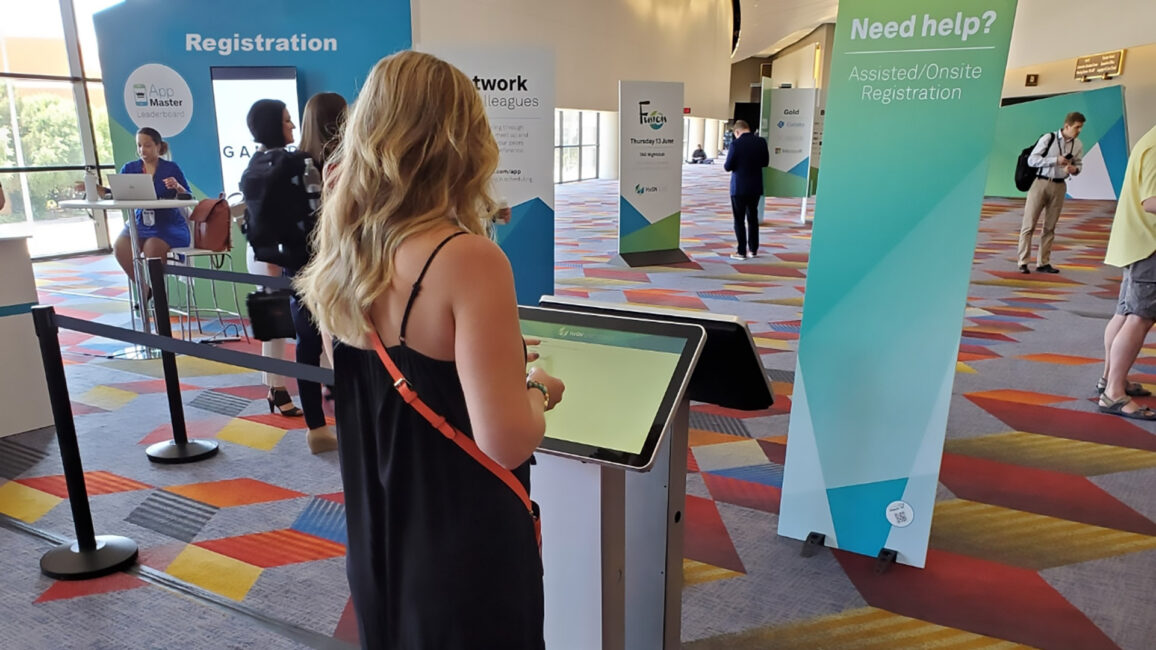
But here’s what’s interesting. Rather than cutting technology, organizations are investing in it in a different way. The Amex GBT forecast indicates that meetings professionals view sophisticated AV technology as a means to elevate experiences, rather than just as a cost to manage. 35% plan to use sophisticated AV technology, such as LED video walls and AI camera tracking, at their 2026 events. 31% will incorporate live polling and feedback tools, and 29% plan to use onsite check-in tools.
This aligns with broader industry trends. When meetings professionals were asked about the most significant benefit of deploying technology, they ranked “delivering a more streamlined attendee experience” first, followed by “creating a more memorable attendee experience.”
The technology isn’t replacing the human element. It’s enhancing it.
Lead Times Are Extending
The pendulum is swinging back on event planning timelines. More than a quarter of meetings professionals (28.6%) are now planning 12+ months out, up from 15.4% in 2024. The majority of events (54.6%) are still planned in the 6-12 months out window, with 37.7% falling in the 6-9 months out range.
This shift toward longer lead times creates opportunities for better technology integration. With more planning runway, organizations can design cohesive experiences where AV supports the narrative from registration through post-event engagement, rather than scrambling for last-minute solutions.
AI Adoption Is Accelerating in F&I Events
One of the most striking findings in the FICP survey is the rapid adoption of artificial intelligence by financial and insurance professionals. Nearly 70% of meetings professionals (69.7%) are currently using AI for meetings and events. Another 22.4% are exploring it.
Where are they using it? The top applications include personalized attendee communications or content (73.6%), scripting (60.4%), and data analysis or post-event reporting (50.9%). Fewer than 20% are currently using AI for more advanced applications, such as attendee behavior analysis, risk monitoring, or contract analysis, but these numbers are likely to grow.
On the hospitality side, 84.5% are currently using AI, though executive support is more lukewarm. Hospitality partners rate their executive stakeholders’ support for AI at just 3.7 out of 10, compared to 4.1 for meetings professionals at financial and insurance (F&I) companies.
The concerns are consistent across both groups. Misinformation or inaccuracy tops the list at 63.9% for meetings professionals and 51.8% for hospitality partners. Data privacy and security come in second, at 61.1% and 51.8%, respectively. These are valid considerations, particularly in highly regulated industries such as financial services and insurance. Working with experienced technology partners who understand compliance requirements becomes even more critical as AI capabilities expand.
Geopolitics: A Hidden Challenge
Here’s a telling divergence in the data. While 86.7% of meetings professionals say the geopolitical climate isn’t impacting their events, 55% of hospitality partners report that geopolitical happenings have affected their ability to support F&I meetings and events in 2025.
What’s happening behind the scenes? Among hospitality partners who’ve been impacted, 62.5% had clients relocate events to different countries or regions, 56.3% had clients cancel events, and 43.8% had clients postpone. 40.6% had clients reduce the budget per attendee, and the same percentage saw an increased need for safety and security planning.
For meetings professionals who have been impacted (13.3%), the top concerns center on increased questions about political or civil stability (45.5%), followed by clients either postponing events or reducing the budget per attendee (each 36.4%).
The survey also reveals a gap in preparation. Meetings professionals rate themselves at just 4.7 out of 10 in their preparedness to manage geopolitical risk. The top two risk areas they’re accounting for include the physical security of attendees and staff, as well as cybersecurity in the event of data breaches (each at 85.7%). Contract language is evolving in response. Six in ten meeting professionals have changed their standard event contracts due to evolving risk concerns. The top changes focus on broader cancellation terms (35.5%) and enhanced force majeure language (32.9%).
What the Data Means for Your 2026 Planning: Five Key Takeaways
The FICP Pulse Survey paints a picture of an industry that’s optimistic but facing real challenges. Event volume is climbing. Spending per attendee is increasing. However, costs are rising even faster in many categories, creating pressure to do more with budgets that may not stretch as far as they once did.
Here are five key points to keep in mind:
Audio/visual is a top-three spending priority for a reason. With 45.5% of meetings professionals listing it as a key budget area, AV ranks third behind only hotel rooms and food and beverage. That’s because the right technology creates the experiences that make events worth attending. Don’t view it as a line item to minimize. View it as an investment in engagement and outcomes.
Plan further out and plan smarter. With more than a quarter of professionals now working 12+ months ahead, you have time to be strategic about technology integration. Use that runway to design experiences that deliver consistency across your entire event portfolio.
Factor in the real cost landscape. If you’re expecting AV costs to stay flat, adjust your assumptions. Nearly 80% of hospitality partners expect increases. Build that into your budgets now rather than being surprised later.
Don’t underestimate risk. Even if geopolitical factors haven’t impacted your events yet, 55% of hospitality partners say they’re seeing effects. Review your contract terms, especially those related to cancellation and force majeure. Ensure you have contingency plans that include technology solutions for quick pivoting if needed.
Take AI seriously, but thoughtfully. Seven in ten of your peers are already using it. The technology can help with everything from communications to data analysis, freeing up time for the strategic and creative work that technology can’t do. Ensure you’re working with partners who understand data privacy and security in regulated industries.
The financial and insurance events landscape for 2026 looks active and engaged. Organizations are bringing people together because they recognize the value that this brings. The challenge now is to ensure that every event justifies the investment, both in terms of dollars and attendee time. With thoughtful planning, strategic technology deployment, and the right partnerships, you can deliver the experiences your attendees expect while managing the cost pressures that are unlikely to disappear anytime soon.