Early Tech Planning: The Strategic Lever Financial Event Planners Can’t Afford to Miss
6 minute read
Table of Contents
The Flexibility Paradox: Lock In to Stay Agile
The Standard Stack: Your Insurance Policy Against Event Fatigue
Attendee Experience Starts With Tech Alignment
The Cost Reality: Early Decisions Control Spend
Seizing the Advantage
Longer planning timelines give planners more control, but only if early decisions are made wisely.
For event managers at financial institutions running numerous events annually, every decision compounds. While longer planning cycles create opportunities for strategic control, they also expose a critical pressure point: when you make technology decisions matters as much as what you decide to do.
According to the 2026 American Express Global Meetings & Events Forecast, incorporating the latest technology ranks among the top five priorities for meeting professionals globally. Yet many financial event teams still treat AV and digital infrastructure as late-stage logistics rather than foundational strategic decisions, leaving money and flexibility on the table.
The Flexibility Paradox: Lock In to Stay Agile
It sounds counterintuitive: making early commitments creates flexibility. But when you scope the core AV and digital components of your high-volume events up front, you build a technology “spine” that can flex when circumstances change. Unexpected venue constraints? You already know your fundamental tech requirements. Changes in audience size? Your streaming and in-room setup scales without redesign. Last-minute program pivots? Your session formats and production capabilities are pre-approved and ready to adapt.
The FICP Pulse Survey (Summer 2025) underscores this urgency: 54.6% of financial and insurance meeting professionals plan events 6 to 12 months out, with 28.6% planning more than 12 months ahead (up from just 15.4% in 2024). These extended timelines allow event planners to secure their technology needs before vendor availability tightens and costs escalate.
And getting ahead of the curve is only becoming more vital. The Amex GBT Forecast shows that 38% of financial event planners cite cost as their number one challenge for 2026, followed by economic uncertainty (32%) and budget cuts (30%). Waiting to address technology until three months before an event forces teams into expensive, reactive procurement at exactly the wrong moment.
The Standard Stack: Your Insurance Policy Against Event Fatigue
When you’re managing dozens of events each year, creating bespoke AV specs for each one is no longer strategic; it’s exhausting and risky. A standardized technology stack can transform recurring events from ground-up builds into repeatable configurations. A few key decisions make up this foundation, as planners set their preferred AV partners, baseline room packages, steaming and event app platforms, and data integration points. Each subsequent event then becomes an adjustment to a proven system rather than a fresh negotiation.
The Amex GBT Forecast found that 72% of meeting professionals now use specific technology or software for managing meetings, and 66% have centralized contracting with preferred vendors. For financial institutions, pre-approved technology stacks eliminate bottlenecks that would otherwise slow every event to a crawl. Consider the alternative: if IT security reviews every event app, streaming vendor, and registration platform individually across 25 events, you’re burning hundreds of hours on redundant approvals. Standardization isn’t about limiting creativity. It’s about freeing your team to focus on content, experience design, and stakeholder engagement instead of vendor paperwork.
Attendee Experience Starts With Tech Alignment
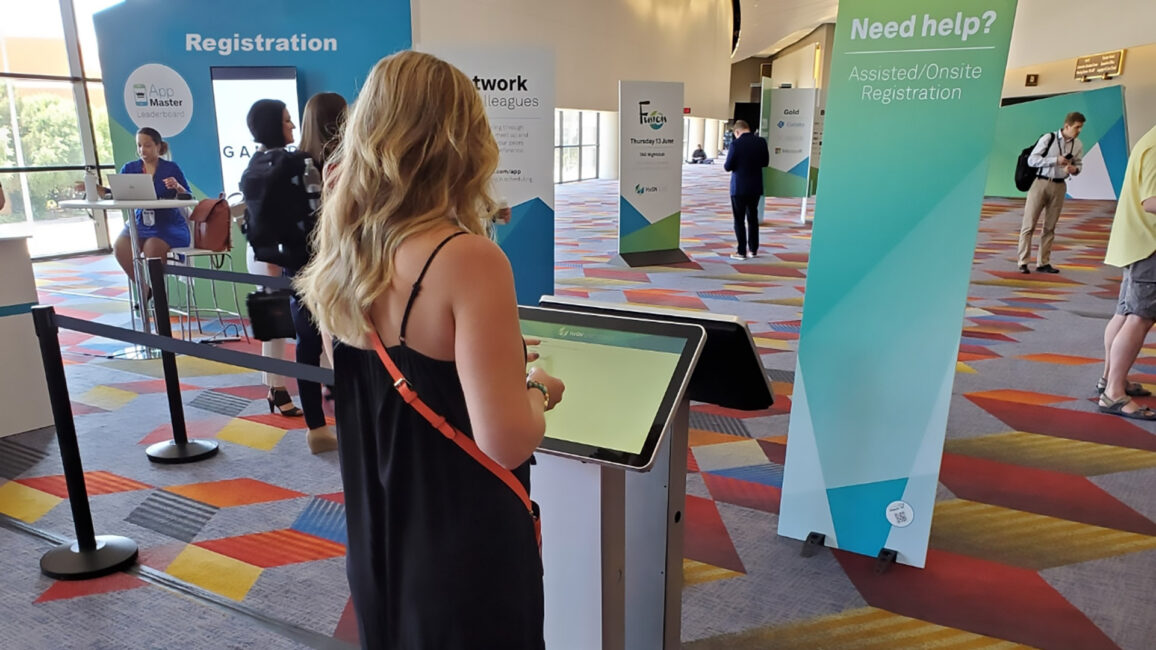
From the attendee perspective, an event and its technology are one in the same. Clunky presentations, lack of digital activations, or a boring mobile app, aren’t merely “tech problems.” They’re experience failures.
When technology and AV are scoped alongside content and formats from day one, planners can design a cohesive attendee journey rather than stitching together disconnected tools at the last minute. The Amex GBT Forecast identifies “delivering a more streamlined attendee experience” as the top benefit of technology deployment for meeting professionals, followed closely by “creating a more memorable attendee experience.” Tech alignment also allows for cleaner data collection and ROI reporting, which are essential when senior management assesses meeting value.
The FICP Pulse Survey shows that senior management perception of meetings and events remains high (73.4 overall on a scale from cost center to competitive advantage). Still, rising meeting professionals (those with fewer than 10 years of experience) saw a 30-point jump in perception scores over last year. Leadership is paying closer attention to the work event teams do and the value they create. Early tech decisions that improve attendee engagement, capture better data, and enable smoother execution make it easier to prove the business case for events.
The Cost Reality: Early Decisions Control Spend
Let’s address the elephant in the room: cost. Early AV scoping mitigates the risk of emergency spending. When technology is left undecided until the final weeks, planners lose negotiating leverage, face limited vendor availability, and often pay premium rates for rush orders or last-minute changes. Locking in partnerships and rates at 9 to 12 months out (especially for a portfolio of events) positions teams to consolidate spend and negotiate volume discounts that aren’t available on a per-event basis.
The Amex GBT Forecast reports that 36% of meeting professionals plan to use data and ROI measurement tools in 2026, and 31% will prioritize improving data collection processes. These tools cost money, but when integrated into the initial planning phase rather than tacked on later, they become part of the event infrastructure rather than a reactive expense.
Seizing the Advantage
The financial institutions that will excel at events in 2026 and beyond aren’t necessarily spending more. They’re making smarter, more proactive decisions. Early technology alignment transforms event management from a constant scramble into a strategic operation. It protects budget, preserves flexibility, reduces team burnout, and most importantly, delivers the seamless, engaging experiences that modern attendees expect and senior stakeholders demand.
Savvy event managers, especially those responsible for large annual programs, treat technology as a foundational strategic decision. The planning timeline is yours to control. Use it wisely.
Sources: 2026 American Express Global Meetings & Events Forecast; FICP Pulse Survey (Summer 2025)