Event Technology Planning Timeline: Your 120-Day Annual Conference Guide
8 minute read
Table of Contents
THE “SCOPE & SCALE” FACTOR: TAILORING YOUR TIMELINE
120 DAYS BEFORE YOUR EVENT
Lock in your event technology partner
Take a walk-through of your event space with your technology partner
Discuss your walk-through in detail with internal and external team members
90 DAYS BEFORE YOUR EVENT
DETERMINE WHAT TECHNICAL ELEMENTS YOU’LL NEED IN WHICH SPACES
DESIGN A DRAFT RUN-OF-SHOW DOCUMENT
SET A FINAL PRODUCTION BUDGET
60 DAYS BEFORE YOUR EVENT
Lock in all your event logistics
Review technical expectations with exhibitors
Schedule your onsite team members
30 DAYS BEFORE YOUR EVENT
Finalize your run-of-show document
Talk about transitions
Touch base with the event space
ONE TO TWO WEEKS BEFORE YOUR EVENT
Construct a load-in schedule with your event technology partner
Hold a technical rehearsal the day before the event starts
Collect all media needed from your presenters and exhibitors
Feeling Ready for Go-Time
Let’s be honest: most event organizers start sketching out their summit or conference the second the previous one ends. You’re building a chronological roadmap to keep your sanity, and as the big day approaches, that map gets a lot more detailed.
By the four-month mark, your timeline should be the definitive resource for your internal team, event technology partners, and exhibitors alike. We’ve designed this guide to highlight the technical and AV production planning milestones that are frequently overlooked but are essential for delivering a high-impact, “wow-factor” experience.
THE “SCOPE & SCALE” FACTOR: TAILORING YOUR TIMELINE
Before you dive into the 120-day countdown, it’s important to realize that the “magic number” for event and conference planning depends entirely on the footprint of your event. A technical setup for a local board meeting is a different world compared to a multi-day international convention.
Consider these three tiers when setting your starting line:
Small-Scale Sessions (Under 50 attendees): For smaller workshops, department retreats, or executive roundtables, the technical needs are usually straightforward. Because these events have fewer moving parts, a lead time of 2 to 3 months is generally sufficient to secure a venue and basic AV support.
Mid-Range Productions (50–250 attendees): Regional sales meetings, company-wide town halls, or small conferences require more coordination. To manage speaker schedules, vendor contracts, and more robust audio-visual layouts, you should ideally begin your planning 4 to 6 months out.
Major Corporate Events (250+ attendees): For annual conferences, product launches, or trade shows, the 120-day mark is actually the home stretch. These high-stakes events often involve complex staging and massive data needs. Planning should begin 9 to 12 months in advance, and for large-scale international summits, 18 months is the industry standard.
120 DAYS BEFORE YOUR EVENT
With four months to go before your event, focus on tying up any loose ends (e.g., event theme, potential speakers, session layouts, marketing materials). You should also set up regular times to touch base with all your partners.
Some of the tasks that belong on your corporate event planning timeline 120 days until showtime include:
Lock in your event technology partner
If you haven’t finalized a preferred partner, it’s important to do so now. Otherwise, your ideal partner may not be able to provide you with the technological devices, support, and onsite personnel you need for your event to have the “wow” factor you want.
Take a walk-through of your event space with your technology partner
Take an onsite walk-through if you can; physically visiting the venue provides a level of comfort in knowing exactly how each space looks. Plus, you can take pictures and videos and obtain room measurements. As part of your site survey, ask (and test) the venue’s bandwidth capabilities.
Discuss your walk-through in detail with internal and external team members
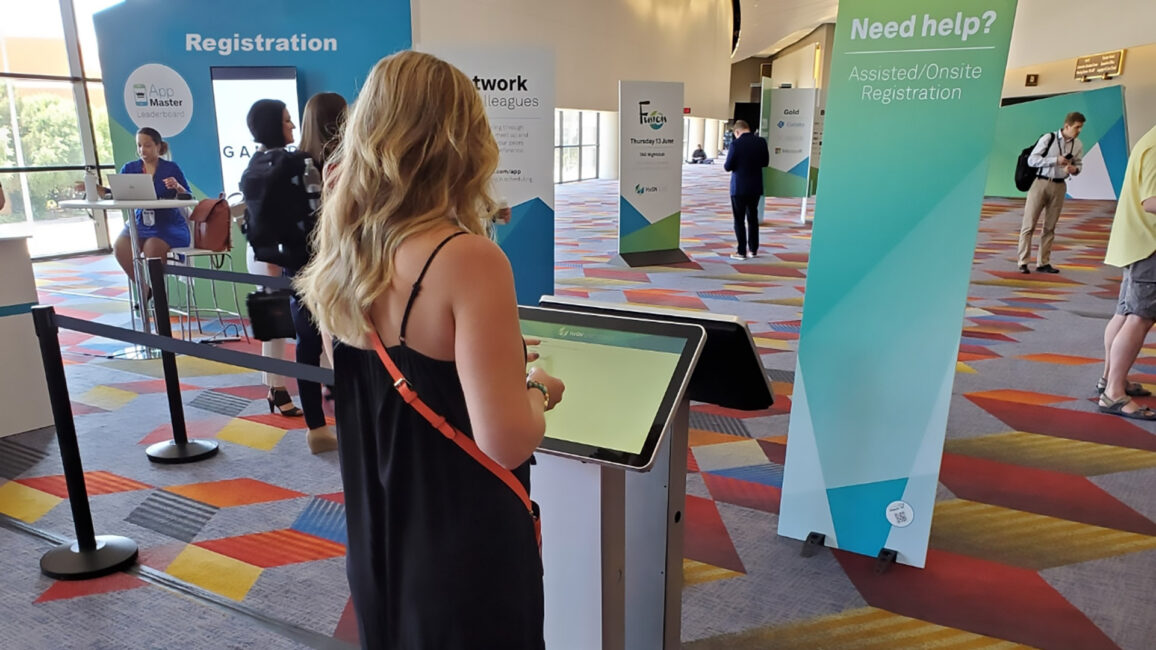
Your walk-through findings will absolutely inform the way that your event unfolds. Set aside a meeting time with your event technology provider to begin laying out all the technical logistics for your event spaces. These may include where to put lights or self-serve badge registration kiosks, or how best to wire each room for optimal AV production effects.
90 DAYS BEFORE YOUR EVENT
With three months to go, you will probably begin to receive more registrations from attendees. As your registration grows, send your event technology team members updates. This will help them understand the size and scope of your event, as well as allow them to make technical recommendations if some sessions are skewing smaller or larger than you originally anticipated.
Other considerations to add to your timeline checklist at this milepost:
DETERMINE WHAT TECHNICAL ELEMENTS YOU’LL NEED IN WHICH SPACES
As you visualize your sessions and speak with speakers, panelists, moderators, and emcees, keep tabs on the technology you’ll need in each space. For instance, your keynote may have very specific audio requests, like wanting to move throughout the crowd (and be heard). You can then pass along those messages to your event tech partner.
DESIGN A DRAFT RUN-OF-SHOW DOCUMENT
Your run-of-show document will outline what’s happening and where it’s happening throughout the day or days of your event. Three months ahead of the event is a good time to construct your initial run-of-show draft. It will need to be refined as you get closer to your event, but it can serve as an excellent resource for everyone involved in your planning. Additionally, you can add technological elements into it.
SET A FINAL PRODUCTION BUDGET
By now, you’ve probably been working with a variable production estimate. At the 90-day mark, it’s time to transition from an estimate to a “budget lock.” This serves as your financial upper limit and allows your event technology partner to officially secure equipment inventory.
60 DAYS BEFORE YOUR EVENT
It’s two months to go, and you should be feeling good about all the planning you’ve done so far. This is a prime time to institute some timeline refinements and adjustments.
Lock in all your event logistics
Use your previously constructed space layouts to lock in exactly where all your event technology equipment, devices, and team members will be located.
Review technical expectations with exhibitors
Are you hosting exhibitors at your event? Your event technology team will need to know exactly how to satisfy your exhibitors’ technical service needs. Pro tip: Contact each exhibitor separately and never assume that they included all the technology they require on their registration form, even if you asked for the details.
Schedule your onsite team members
Have you made sure all your team members can be available for your event? Lock them in and give them all a role to perform, such as a point of contact for vendors. Share your list of people onsite (and their responsibilities) with your event technology partner so everyone knows who’s involved.
30 DAYS BEFORE YOUR EVENT
A month before your event, reach out to all your speakers, vendors, and other partners. Be sure they’re all coming, too. It’s not unusual for people to have conflicts at the last minute, and you need to know upfront if you have to make changes.
Other items to keep in mind at this point:
Finalize your run-of-show document
Set up a meeting with your internal team and finalize your run-of-show for the entire event. Then hold a meeting with your event technology provider to walk through the run-of-show and tie up any loose ends.
Talk about transitions
Often, what happens between event sessions can make or break attendees’ experience. Outlining each transition and the journey of your attendees helps you avoid friction points.
Touch base with the event space
Meeting with the event space contacts about 30 days before your event opens the door to finding out important information you might not have known otherwise. For example, the venue’s parking lot may be under construction. Or, an event space might have changed since your original walkthrough. Talking with someone early gives you the time and space to make changes if needed.
ONE TO TWO WEEKS BEFORE YOUR EVENT
When your event is just a week away, you should be in an excellent position if you’ve kept up with your event technology planning timeline. In fact, you probably will feel excited rather than overwhelmed, which is a good harbinger of a stellar event.
As the countdown begins, take the time to do just a couple of tasks:
Construct a load-in schedule with your event technology partner
This document will outline the timeframe for bringing all technical equipment in and out of your event venue.
Hold a technical rehearsal the day before the event starts
Plan to get into your event space at least a day ahead so you can run through all the technical details
Collect all media needed from your presenters and exhibitors
While the week of the event is for final checks, your “Content Freeze” should actually happen 10 to 14 days prior. Request that all presenters, speakers, and exhibitors submit their final media files two weeks out. By the one-week mark, your technology partner should have a clean, tested copy of every asset ready for the rehearsal.
Feeling Ready for Go-Time
You’ve probably been to events that just fell apart from the moment they began. But you shouldn’t have that experience if you follow a concise corporate event planning timeline. On the contrary, being pragmatic will allow you to legitimately enjoy your event because you’ll know that you’ve thought of every contingency.