Event Wi-Fi Requirements: How to Calculate Bandwidth for Conferences
7 minute read
Table of Contents
HOW TO CALCULATE BANDWIDTH FOR CONFERENCES, MEETINGS AND MORE
Develop a realistic device-per-person figure
Include your presenters, exhibitors, and staffers in your device calculation
Include the bandwidth needs for any technical equipment
Plan ahead for unexpected bandwidth emergencies
Consider the layout of your venue
MAPPING OUT YOUR UNIQUE CONFERENCE WI-FI CALCULATION
WORK WITH A DEPENDABLE PARTNER FOR EVENT NETWORK DESIGN AND HARDWARE
Offering lightning-fast, uninterrupted Wi-Fi is a fast way to win the hearts of your event attendees. However, the opposite is also true: Give them shoddy connectivity, and they’ll ding you on their feedback.
Yet figuring out your event Wi-Fi requirements can seem like a tough puzzle to crack. On the one hand, you want to make sure you have enough bandwidth to accommodate everyone at your event. On the other hand, you don’t want to blow your budget by buying more bandwidth than you need. The key is to get ahead of it because bandwidth and internet upgrades represent one of the fastest-growing hidden AV costs.
What’s the answer? First, assess bandwidth needs based on attendee count, planned tech integrations, and streaming requirements. Be sure to request internet specifications during venue selection, including upload and download speeds, dedicated versus shared connections, and upgrade pricing. Also, know your rights – you can leverage your own dedicated internet with suppliers like Smartsource.
HOW TO CALCULATE BANDWIDTH FOR CONFERENCES, MEETINGS AND MORE
The solution to demystifying your event Wi-Fi requirements lies in tackling the problem piece by piece. By seeing it as a multi-leveled issue, you can more accurately construct a conference Wi-Fi calculator that will work for your next event.
Certainly, you can find calculators online. However, you may not want a one-size-fits-most formula. Your event may be unlike others, including others you’ve hosted.
For instance, if you’re planning to scale your summit sixfold from 200 to 2,000 attendees, you can’t just multiply your Wi-Fi needs by a half-dozen and hope it all works. That’s why it’s important for you to take the time upfront to put in place a few measures to ensure the bandwidth you need to afford everyone the opportunity to stay tethered during your event.
Below are five steps to help you get a handle on your event’s Internet needs based on reliable numbers.
Develop a realistic device-per-person figure
Many event planners miss the mark on this important event bandwidth estimate because they assume that their event attendees will use only one device during their event. This is unlikely to happen, especially in today’s world.
It’s safe to say that the vast majority of event attendees will bring along their phones. But those aren’t apt to be the only devices they’ll carry with them from room to room. Case in point: How many times have you seen a conference attendee lugging around a phone, a smartwatch, a tablet, and a laptop? While the smartwatch probably isn’t going to eat much bandwidth, the other devices could.
With this in mind, expect your 1,000-person event to easily bring 2,500 devices into the venue. The trick is remembering that not every device will pull data at the same time. Instead of buying a massive internet plan for every single device, we calculate bandwidth based on concurrent users (the maximum number of people actively browsing at any given moment) to find the perfect, cost-effective sweet spot for your contract.
Include your presenters, exhibitors, and staffers in your device calculation
At this point, your basic device bandwidth calculation may be growing, but it isn’t quite complete. Why? You haven’t included all the devices your staffers, partners, and special guests will bring to your event.
Again, be sure to add all those devices into the calculation. You may even want to ask them to tell you how many devices they’ll have. After all, multiple exhibitors could be using several tablets to collect lead information. Alternatively, a presenter might want to show a video and won’t like it if the video won’t play. Or, a workshop presenter might use live polls with QR codes as an engagement strategy to get real-time interactions with the audience.
Here’s the truth: There’s absolutely nothing wrong with finding out about the Wi-Fi expectations of all the non-attendees for your event. Knowing the information sooner helps you plan accordingly and avoid running out of bandwidth.
Include the bandwidth needs for any technical equipment
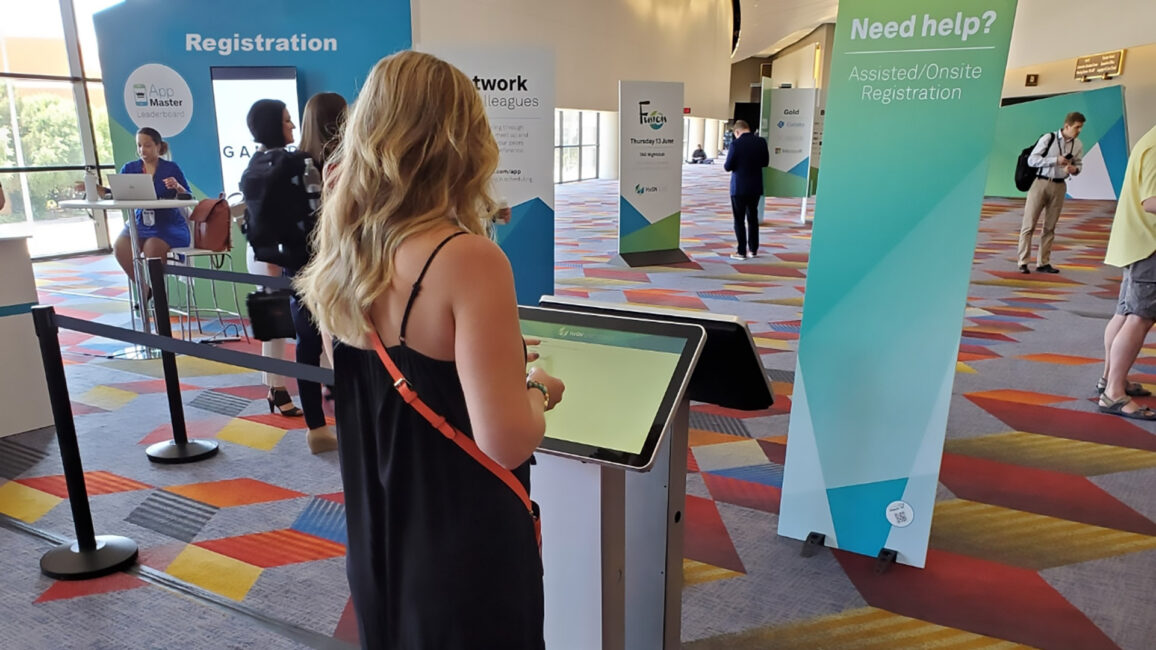
When you’re working with your preferred professional event tech partner, have a conversation about the bandwidth requirements for any equipment you’ll use. This could include all your self-serve registration kiosks or a series of dynamic LED screens featuring several live feeds from various areas of your event. And don’t forget about credit card machines; they don’t take up a lot of bandwidth, but they could use some.
Plan ahead for unexpected bandwidth emergencies
What happens if one of your speakers suddenly tells you they can’t be at your event live? They may want to stream into a presentation instead so they don’t lose out on the ability to get in front of your attendees. Consequently, you’ll need to have extra bandwidth factored into your calculation or risk not being able to accommodate them.
This happens more often than you may think. You’ll be much less stressed when you’re sure that their video and audio will sync up beautifully. Otherwise, your attendees — who may have wanted to meet the presenter in person — could feel unsatisfied with the result.
Consider the layout of your venue
A final factor in your bandwidth estimation is the size of your event venue.
The more rooms you use, the higher the chances that you’ll need to invest in additional access points or other solutions to boost Wi-Fi signals throughout your event.
During your venue walkthrough, be sure to look for spots where Wi-Fi is generally weak. Many structural elements, such as sturdy walls and interior rooms, can become Internet connectivity dead zones. If you’re hosting your event in any of those locations, you’ll need to ensure that you’ve covered your bases.
MAPPING OUT YOUR UNIQUE CONFERENCE WI-FI CALCULATION
At this point, you should have all the information to pull together a general calculation of how much bandwidth your event will use. Since bandwidth is measured in Mbps, consider adding together all your findings by using the following formulas based on your estimated concurrent users:
General individual browsing and social media uploads: 1-5 Mbps per active user
Video conferencing via Teams or Zoom: around 1-4 Mbps per active call (depending on video quality)
Outbound livestreaming: Up to 20 Mbps of dedicated upload speed per stream
4K video playback/streaming: 25 or more Mbps of download speed per stream
Keep in mind that venues sell both symmetrical bandwidth (equal upload and download speeds) and asymmetrical bandwidth (where download speed is fast, but upload speed is much slower). Because streaming out to the web heavily relies on your upload speed, you’ll want to ensure your contract features a symmetrical connection to cover both sides of the equation.
Remember that you’ll also want to look at when you anticipate needing the most coverage, such as during a livestream or during breaks when everyone will be on their devices. As a final note, consider ways to implement redundancies so that dropped Wi-Fi is unlikely to happen.
WORK WITH A DEPENDABLE PARTNER FOR EVENT NETWORK DESIGN AND HARDWARE
Still feeling like you’re not sure how to best approximate your Wi-Fi requirements? Wondering how to negotiate costs with your venue without overpaying for unnecessary data or under-ordering and causing an event network failure?
SmartSource can take the guesswork out of your event planning. From the initial meetings with our team, you’ll start talking about event attendee device use expectations, anticipated attendee online behaviors, and AV production needs. Our goal is for you to feel comfortable that you’re getting the right amount of Mbps to provide coverage every time you host an event, and you aren’t paying for what you don’t need.
Yes, it can be confusing if you’ve never negotiated this before. But with SmartSource by your side, you and your attendees will have the right tech infrastructure in place to ensure your event remains flawless from registration to the closing remarks.