Can modular LED tiles make shapes other than flat walls?
How do I choose the right LED format for my event?
What is an LED poster?
“7 Ways to Use LED at Events That Aren’t a Giant Screen Behind the Stage”
When someone says “we want LED,” they usually picture the same thing: a big rectangle behind the stage. That rectangle is fine. It is also the least creative thing you can do with a technology that now comes in tiles you can build into almost any shape.
The question is not how big the wall is. It is what job you need the light to do. Attendees still say in-person is where they best learn about new products, and most say they come to connect. Yet only 15% of organizers rate their own networking as effective. A wall behind a stage does not fix that. The right LED format, placed where the attendee actually is, can.
Here are seven moves beyond the wall, sorted by the job each one does.
1. THE LED POSTER
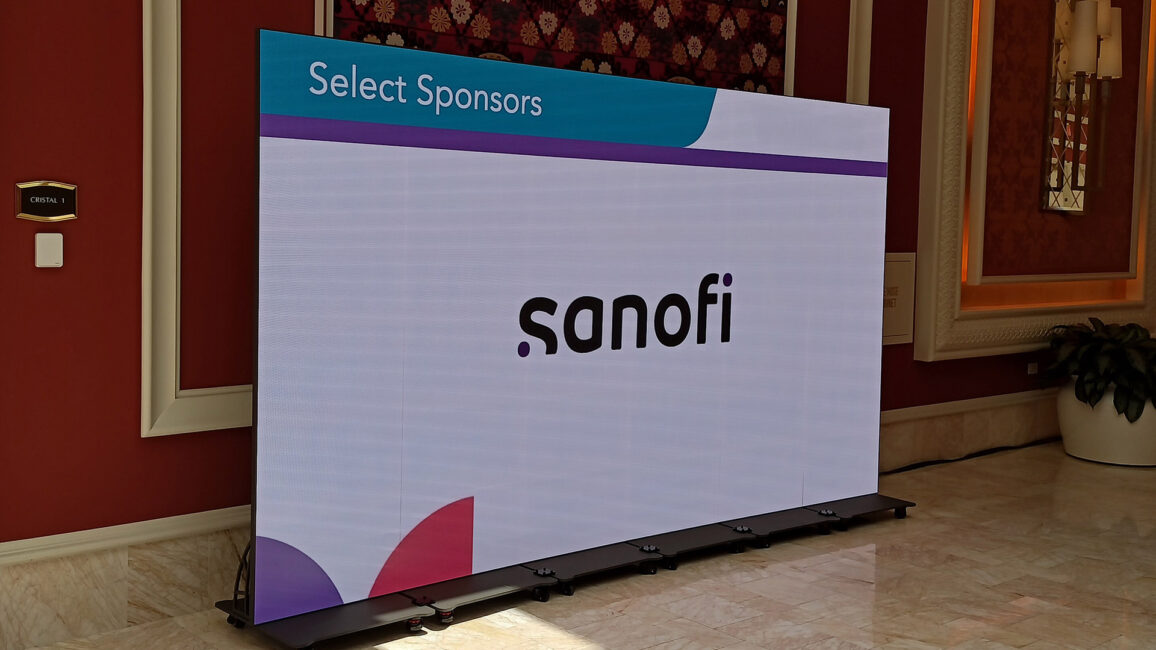
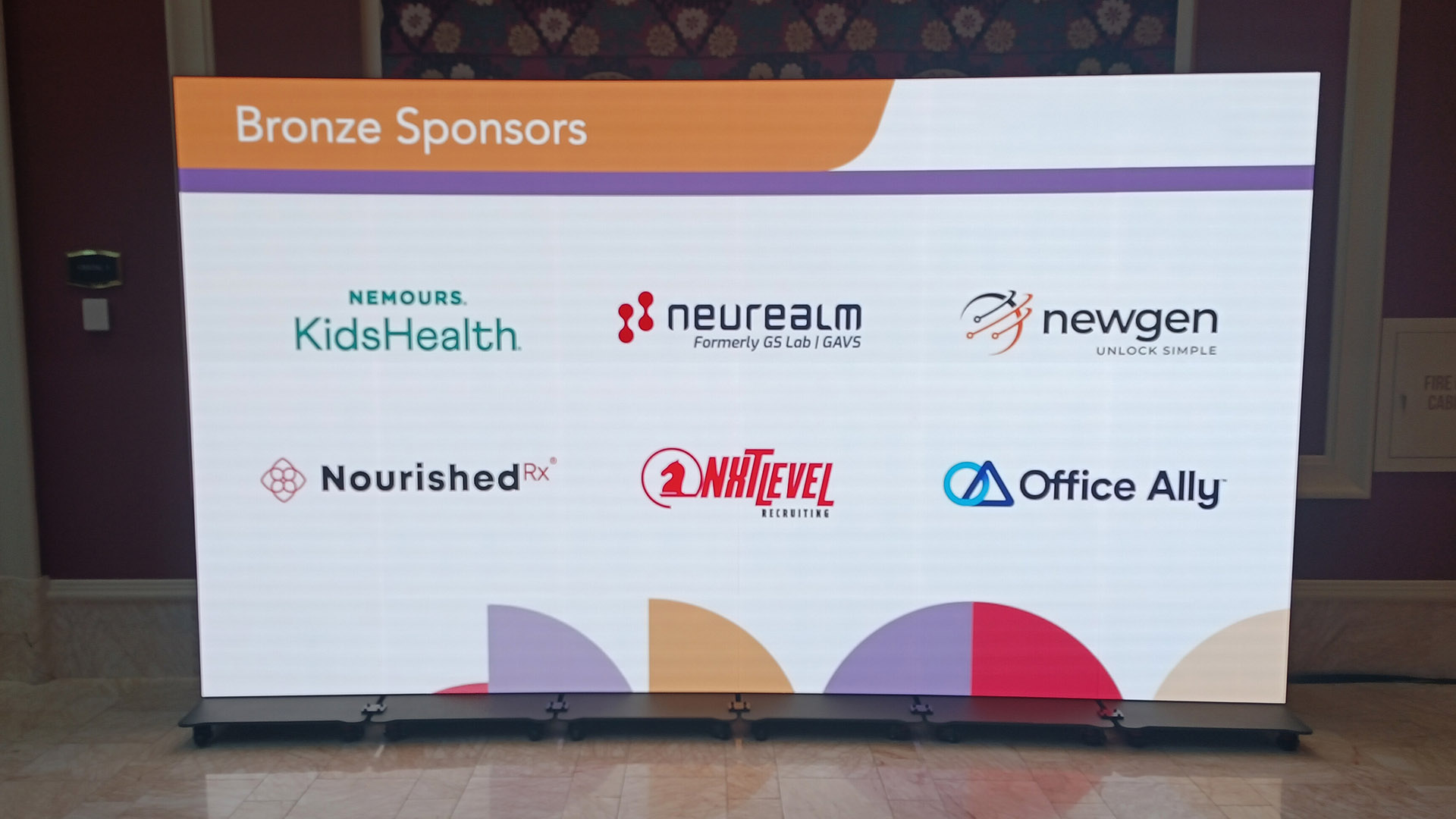
A freestanding, floor-standing display about the size of a large printed poster, running fine-pitch LED. The job: replace printed signage, wayfinding, and sponsor moments with something that updates instantly and moves. When the agenda changes, you change the screen, not the reprint order. Build a creative wall utilizing these versatile posters and you have something unexpected within your exhibit or at your event. – put connect booth here
2. THE LED COLUMN OR TOTEM
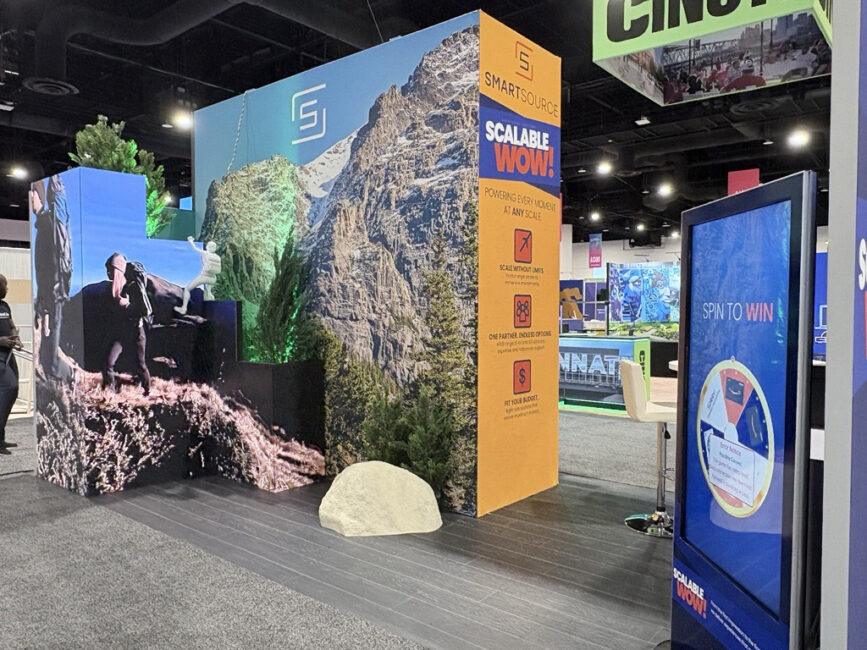
Vertical tiles wrapping a pillar or standing on their own. The job: 360-degree branding in lobbies, booths, and pre-function space, where a flat wall would only face one direction and most of the room would miss it. Design the content vertically for it, because a cropped widescreen slide looks lost on a tall column.
3. THE LED FLOOR
Tiles underfoot. The job: reveal moments, wayfinding paths that lead people somewhere, and raw stage energy. It turns the one surface everyone forgets, the ground, into part of the show. It also carries real requirements: floor-rated tiles that take foot traffic and cable runs that are safe to walk on, which is a planning conversation, not an afterthought.
4. THE CURVED OR WRAPAROUND BACKDROP
Modular tiles bent into a curve instead of a flat plane. The job: immersion without a massive rectangle. The curve pulls focus to center stage and makes a mid-size footprint feel like an environment. Modular tiles bend in fixed increments, so design the content to the curve from the start rather than flattening a wide image onto it.
5. THE ENTRANCE PORTAL OR ARCHWAY
An LED threshold people walk through. The job: the “you are entering something” moment, which is also the most photographed spot at most events. Design it well and attendees do your reach for you. Give it clean light and a clear sightline so the shot actually reads on a phone, because that is where it is going to live.
6. THE STAGE RIBBON OR TICKER
A long, thin run of LED along the front of a stage or down a runway. The job: reveals, live data, sponsor rotations, and lower-thirds that carry the length of the walk instead of sitting in one static box. Content for a ribbon has to be built for an extreme wide aspect ratio, so plan the creative for the shape instead of cramming a normal slide into it.
7. THE INTERACTIVE CONTENT
LED paired with touch or motion at a kiosk or wall. The job: let attendees pull the information they want instead of waiting for it to be pushed at them from the main stage. It rewards the people who lean in. One caveat: an interactive screen with no prompt just sits there, so it needs a clear invitation, and often a person, to spark the first touch.
START FROM THE JOB, NOT THE SHAPE
Every one of these uses the same underlying modular tiles. The difference is intent. A giant wall is a reflex. The right format is a decision, made by starting from what you need the moment to do and where the attendee will be standing when it happens. And because these formats share the same modular tiles, choosing three of them for one event does not have to mean three separate hardware buys.
Not sure which format fits your moment? Take the LED Format Picker. Answer a few questions about your goal, your space, and your audience, and get the LED format that fits, with a note on what it takes to pull off.
Beyond the stage wall, planners use LED as freestanding posters, columns and totems, floors, curved backdrops, entrance archways, stage ribbons, and interactive content stations. Because modern LED is modular, the same tiles can take many of these shapes.
Can modular LED tiles make shapes other than flat walls?
Yes. Modular tiles can be configured into curves, columns, arches, floors, and freestanding units, which is what makes the format-first approach possible rather than defaulting to one big rectangle.
How do I choose the right LED format for my event?
Start from the job you need done and where your attendees will be, not from a shape. A reveal, a wayfinding need, a sponsor rotation, and a networking lounge each point to a different format.
What is an LED poster?
A freestanding, floor-standing LED display packaged like a large poster, which shows motion and updates instantly. It is one of the most flexible non-wall formats, and it has its own deeper explainer if you want the full picture.