How Universities Can Scale Event Technology for Peak Seasons and Last-Minute Requests
7 minute read
Table of Contents
TWO PRIORITIES, AT THE SAME TIME
RESOURCING THE CALENDAR
WHY THE PARTNER AND THE EQUIPMENT MATTER
THE GOAL: TECHNOLOGY THE AUDIENCE NEVER NOTICES
CONSISTENCY AT SCALE
Universities don’t have a single event season. They have cycles of predictable demand, like orientation, homecoming, and commencement, with sudden requests layered on top. A department adds a livestream two days before a lecture. A guest speaker needs a confidence monitor the morning of an event. A microphone fails an hour before doors open.
Campus event technology faces a unique challenge: demand is anything but consistent. It rises and falls throughout the year, with increasingly intense peaks as campus calendars become more crowded.
High event volume. Dozens of events can be run across a campus in a single week, particularly during orientation, homecoming, and commencement.
Multiple departments book independently. Athletics, alumni relations, academic departments, student affairs, and facilities all schedule events on their own timelines, often without visibility into what everyone else has booked.
Different event types at the same time and location. A lecture, a gala, a hybrid conference, and a graduation ceremony all require different equipment, different staffing skill sets, and different setup timelines, sometimes in the same building on the same day.
Unpredictable, last-minute requests. A guest speaker needs a specific monitor. A department head decides at the last minute to livestream a panel. A microphone fails an hour before doors open.
Sizing a technology program for the average day results in failure at the peaks and waste in the valleys. The right approach is not to simply react quickly to each request. It is to build a strategy that flexes with the calendar itself.
TWO PRIORITIES, AT THE SAME TIME
A campus event technology strategy has to meet two requirements at once. First, it must scale up quickly when demand surges. These are usually known dates on the academic calendar, but the equipment, staffing, and coordination they require can dwarf what the rest of the year needs by a wide margin. A strategy built around scaling means having access to enough inventory, enough trained technicians, and enough logistical capacity to support several large, simultaneous events without pulling resources away from the smaller ones happening the same week.
Second, it must respond reliably when departments come in with a last-minute request. Not every event on a campus calendar is planned for months in advance. A department decided on Tuesday that Thursday’s guest lecture needs to be recorded. A student group confirmed AV vendor cancels two days before their event. A microphone dies mid-event and needs to be swapped without the audience noticing. Reliability under short notice is part of the job.
Scaling for the big, known peaks and responding to small, unknown requests require different things. A program that is only good at one of them may fail at the other, usually during the same week.
RESOURCING THE CALENDAR
The practical implication is straightforward, even if it is not simple to execute: technology resources need to flex with the academic calendar. Orientation week, homecoming weekend, and commencement each carry their own staffing and equipment plans, built around that period’s actual demand. It also means keeping enough flexibility in reserve to support classroom demands.
Universities that get this right typically rely on a partner who can flex inventory and staffing up and down with the calendar, rather than trying to build and maintain that surge capacity entirely in-house year-round. Owning enough equipment and staff to comfortably cover commencement week means owning far more than is needed for most of the year. A strong AV and event technology partner absorbs that swing, bringing in additional gear and trained crew for the busy stretches and scaling back down without leaving the university carrying idle inventory the rest of the time.
It is tempting to think of event technology scaling as a hardware and headcount problem: more projectors, more microphones, more hands-on deck. The equipment matters, but the partner behind it matters more.
A good partner brings a few things a spreadsheet of equipment cannot:
Institutional memory of the campus. Knowing which rooms have tricky acoustics, which loading docks are usable during graduation weekend, and which building Wi-Fi struggles under a full auditorium saves time that a last-minute vendor simply does not have.
A bench deep enough for the actual peak. Academic calendars are predictable in shape but not always in size. A partner with access to a wider pool of equipment and technicians can absorb a bigger-than-expected turnout without scrambling.
A process for handling requests that arrive with little notice. This includes having spare capacity, clear communication channels, and technicians who know how to troubleshoot quietly in the middle of a live event.
The universities that treat event technology as a true partnership, rather than a transactional rental relationship, tend to handle both the planned peaks and the surprise requests more calmly. Building that relationship, and knowing what to expect from it, starts with the basics covered in how to build an AV checklist for university events, which lays out the planning details that keep a large campus event from unraveling.
THE GOAL: TECHNOLOGY THE AUDIENCE NEVER NOTICES
There is a simple test for whether a campus event technology program is working. Does anyone in the audience notice it?
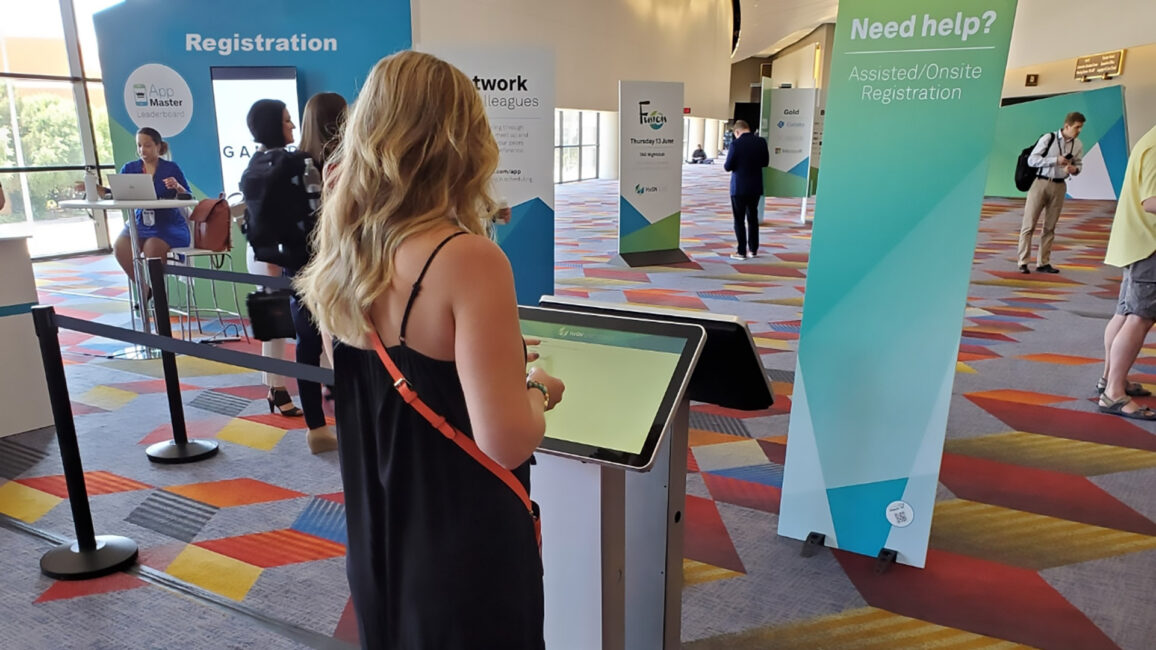
Good AV support is invisible to the attendee. The microphone works. The slides advance on cue. The livestream doesn’t drop. The registration line moves at a normal pace, something worth planning for directly through tools like the ones covered in how check-in technology reduces event registration lines. When the technology is doing its job, the focus stays on the keynote speaker, the graduate crossing the stage, or the panel discussion, not on a technician troubleshooting a cable in the back of the room.
That standard does not lower just because a request came two days ago instead of two months ago. A last-minute request should not mean a lower-quality experience. It should mean the same standard of execution, delivered faster. Whether it is a Wi-Fi network sized correctly for a packed conference hall (a topic worth understanding in more detail through how to calculate event Wi-Fi bandwidth requirements) or a single confidence monitor added the morning of a lecture, the attendee should never be able to tell which requests were planned for months and which ones came together in 48 hours.
CONSISTENCY AT SCALE
The through line across all of this is consistency. A university event calendar will always have peaks and valleys. Some departments will always book independently, and requests will arrive late. None of that is going to change.
What can change is how prepared the technology program is to meet that reality: enough capacity to scale for the known peaks, enough flexibility to respond to the unknown requests, and a partner who treats both as part of the same job rather than two separate problems. With the right strategy, the size of the event stops being the variable that determines the quality of the experience.